Why Your Water Softener Salt Is Clumping Up
Salt clumping in your water softener? Learn what salt bridges are, how to safely break them up at home, and how to prevent them from coming back.
Why Your Water Softener Salt Is Clumping Up
We recently got a call from a homeowner — let’s call him Mike — who was pretty frustrated with his Aquasure water softener. He’d just had his home re-piped, and ever since the plumbing crew finished, the softener didn’t seem to be doing its job.
Mike told us he could still hear the unit trying to run, but when he lifted the lid and reached into the brine tank, the salt felt hard and clumped. His dishes weren’t coming out as clean, and his water didn’t feel as “silky” as it used to. He was worried the whole system was shot.
As we talked through what he was seeing, we quickly recognized a very common issue: a salt bridge in the brine tank. We walked Mike through how to safely deal with it at home — and in this post, we’ll walk you through the same steps.
What Is a Salt Bridge in a Water Softener?
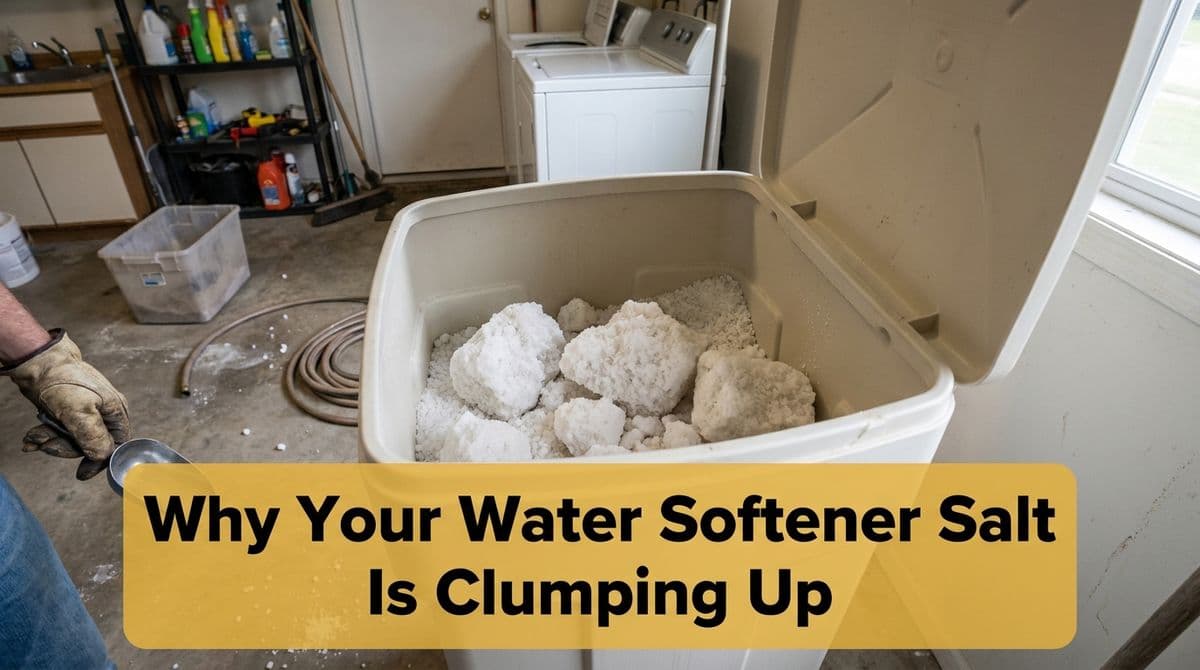
A salt bridge is a hard crust that forms in the brine tank of your water softener. Instead of the salt slowly dissolving into the water at the bottom of the tank, it forms a solid shelf or dome.
From the top, it can look like the tank is full of salt and everything is fine. But underneath that hardened layer, there may be very little salt actually dissolving into the water — which means your softener isn’t making proper brine and isn’t softening your water.
Common signs you have a salt bridge
- Your water doesn’t feel as soft as it used to (soap doesn’t lather, skin feels dry).
- Spots and film on dishes, glass, and shower doors start to return.
- The softener seems to “run” on schedule, but performance is poor.
- The salt level appears high, but barely goes down week to week.
These were exactly the kinds of symptoms Mike described after his re-pipe project. Once we heard about the “hard salt” when he reached into the tank, salt bridging was the clear suspect.
What Causes Your Softener Salt to Clump?
There are a few reasons salt can harden and bridge inside the tank:
- High humidity: Moist air can cause the salt to crust together instead of dissolving evenly.
- Overfilling the tank: Keeping the tank packed with salt all the way to the top puts more pressure on the salt at the bottom, encouraging bridging.
- Infrequent regeneration cycles: If the softener isn’t drawing brine as often, salt may sit too long and harden.
- Salt type or quality: Some cheap or fine salts are more prone to clumping than high-quality pellets.
- Plumbing changes or shutoffs: Work like a whole-house re-pipe can involve shutting water off or moving lines, which may leave the softener idle or partially functioning — just like what likely happened at Mike’s house.
Over time, these conditions can form that solid “bridge” of salt, blocking the salt from properly mixing with water.
How to Safely Break a Salt Bridge at Home
The good news is that a salt bridge is usually fixable without special tools. With Mike, we walked him through a simple, careful process he could do himself. Here’s the step-by-step version we recommend to homeowners.
1. Confirm it’s really a salt bridge
Before breaking anything up, we want to confirm what’s going on:
- Open the brine tank lid.
- Use something long and rigid (like a broom handle or mop handle) to gently press straight down into the salt.
If you feel a hard, crusty layer on top, then the broom suddenly “breaks through” into an empty or softer area below, that’s a classic salt bridge.
2. Gently break up the hardened salt
This is the part we talked about in detail with Mike. We told him to grab a broom handle and:
- Stand to the side of the tank opening so you’re not leaning directly over it.
- Use the broom handle to tap down gently in several spots across the salt surface.
- Avoid stabbing or pounding too hard — we don’t want to crack the plastic tank.
The goal is to loosen the crust and let it collapse into smaller chunks. Once the bridge breaks, you’ll feel the handle move more freely and you may see the salt level drop.
3. Scoop out or break up larger chunks
After the initial bridge is broken:
- Carefully reach in with a plastic scoop, small bucket, or gloved hands.
- Remove very large, rock-hard chunks of salt that won’t easily dissolve.
- Break medium chunks into smaller pieces and let them fall to the bottom where they can dissolve.
If the water level looks low or sludgy, you can remove some of that salty water and replace it with fresh water according to your softener’s manual.
After the Bridge Is Broken: Get Your System Back on Track
Once we talked Mike through breaking up the salt bridge, we also reminded him about a couple of follow-up steps to help his Aquasure system recover.
1. Check the settings and programming
Any time there’s been plumbing work, power outages, or long periods of disuse, it’s smart to:
- Confirm the time and regeneration schedule on the control head.
- Make sure the system isn’t accidentally in bypass mode.
- Review the hardness setting to match your local water hardness.
On Mike’s call, we explained that as long as the unit is still programmed correctly and the salt can dissolve again, it should resume normal softening.
2. Manually start a regeneration cycle
After fixing a salt bridge, we usually recommend homeowners:
- Use the control panel to start a manual regeneration (check your brand’s instructions).
- Let the cycle run completely to draw fresh brine through the system.
This helps flush out any old brine and gets the resin bed properly recharged with softened water.
How to Prevent Salt Bridges in the Future
With Mike, we didn’t just stop at the quick fix; we also shared a few habits that can keep his salt from clumping again. These simple practices work for most homeowners:
- Don’t overfill the brine tank. Keep salt below the very top — usually no more than 2/3 full.
- Use quality salt pellets. Pellets typically bridge less than fine crystals or rock salt.
- Keep the lid closed. This helps minimize moisture and debris entering the tank.
- Check the tank monthly. Lightly tap with a broom handle to catch bridging early.
- Have settings verified after plumbing work. If you’ve had a re-pipe or other major work, it’s worth having a pro confirm the softener is tied back in correctly.
When to Call a Professional
A salt bridge is something many homeowners can safely tackle on their own with a little guidance, just like we did with Mike over the phone. But there are times when it’s smarter to bring in a professional:
- You’re not comfortable working around the system.
- The tank or control head appears damaged or leaking.
- You keep getting bridges even after changing habits and salt types.
- The system still doesn’t soften properly after you’ve broken up the bridge and run a regeneration.
We install and work with a variety of softeners and filtration systems, including Aquasure, and our goal is always to educate first so you can make the best decision for your home. If you’re unsure what you’re looking at in your brine tank, snapping a quick photo and sharing it with a trusted plumber is often the easiest next step.
Salt bridges might be annoying, but they’re usually fixable — and with a little routine checking, you can keep your water softener running smoothly for years.